

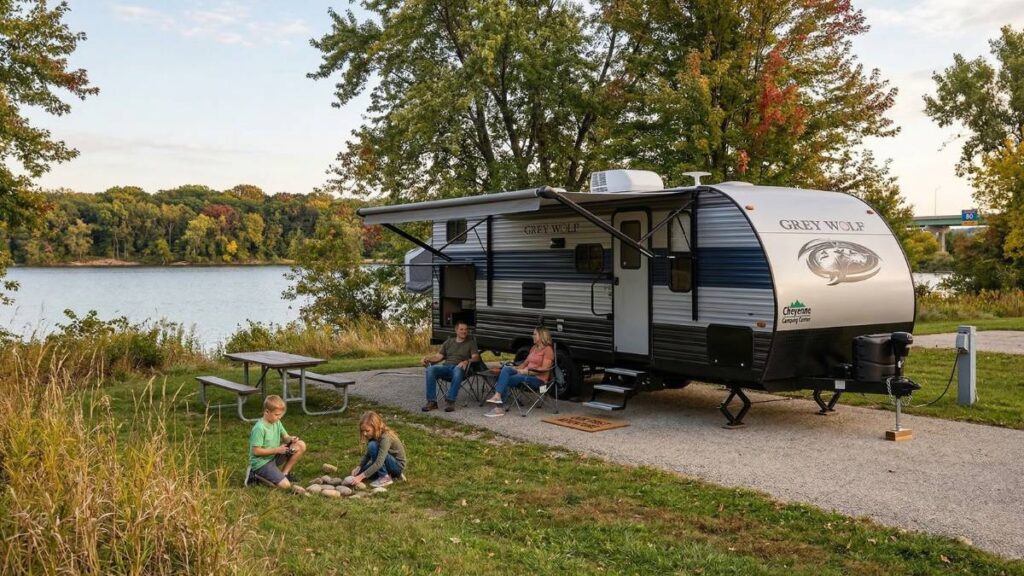
Before you start your RV journey, make sure the camper you choose truly fits your travel style and adventures ahead. In this guide, we’ll help you avoid common pitfalls, understand RV types, and choose a camper that meets your lifestyle, budget, and vehicle, with expert advice from our experienced team.
Buying a new camper is an exciting adventure. It’s about more than picking a cool floorplan; it’s about finding the best RV for first-time buyers that fits your lifestyle, your vehicle, your travel goals, and your budget. Whether you’re planning weekend getaways or cross-country road trips, this guide will help you make a confident, informed choice.
At Blue Compass RV Quad Cities, we’ve helped thousands of families find their perfect RV. We value honesty, transparency, and lasting customer relationships.
This guide focuses on real-world decisions first-time RV buyers face, towing, budget, layout, and ownership, so you can avoid costly mistakes and buy with confidence. Updated February 2026 to reflect current RV features and first-time buyer considerations.
- Know your vehicle’s towing limits before you shop
- Plan for total ownership costs beyond the payment
- Choose an RV type that matches your travel style
- Do a structured walkthrough before delivery
Jump To:
✅ Step 1: Know Your Towing Capacity and What It Really Means
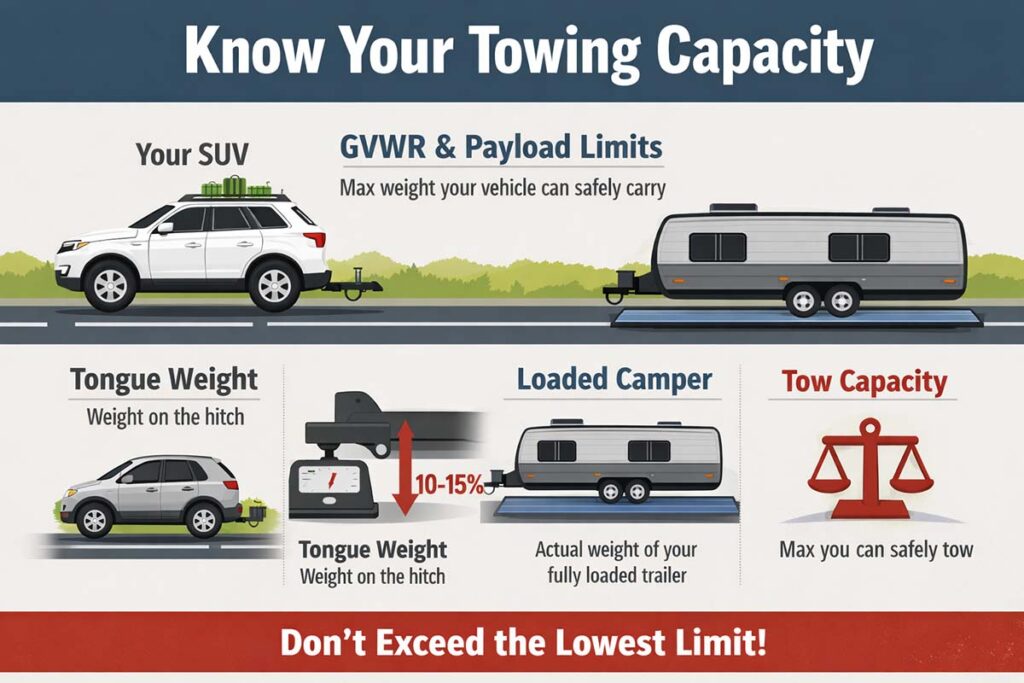
Before you start shopping, you need to understand your vehicle’s actual towing capacity. Start by calling your auto dealer with your VIN. They’ll help you determine your specific tow rating based on your engine, axle ratio, drivetrain (2WD or 4WD), and trim package. Online charts can be misleading, so get the facts directly! 💡 Just because your vehicle is rated to tow 8,000 pounds doesn’t mean you should buy a camper that weighs 8,000 pounds!
Key Weight Terms to Understand:
- UVW (Unloaded Vehicle Weight): The dry weight of the camper, straight from the factory with no gear, fluids, or extras.
- GVWR (Gross Vehicle Weight Rating): The maximum weight of the camper when fully loaded.
- Cargo weight: Everything you add: gear, food, clothes, propane, water, batteries. This often adds 500–1,000 pounds or more.
- Fluids: Water weighs 8.3 pounds per gallon. A full 40-gallon tank adds 332 pounds. Don’t travel with full water tanks unless absolutely necessary.
- Hitch weight (Tongue weight): The downward force the trailer places on the hitch. This is critical for safe towing. A weight-distributing hitch can help balance this load and improve handling. Travel trailers typically put 10–15% of their weight on the hitch. Fifth wheels often place 15–25% of their weight on the truck bed.
Safe Towing Rule:
Your fully loaded camper should generally weigh 80% or less of your vehicle’s maximum tow rating. That margin protects your engine, drivetrain, brakes, and family.
Quick Weight Checklist
- Tow rating alone isn’t enough: payload matters
- Dry weight does not include water, propane, batteries, or gear
- Tongue weight (travel trailers) and pin weight (fifth wheels) reduce payload fast
- Loaded RVs are almost always heavier than expected
✅ Step 2: Set a Realistic RV Budget (Beyond the Monthly Payment)
Sure, you can get a low monthly payment with an extended term, but that will cost you more in the long run. Budgeting for an RV isn’t just about the monthly payment. Consider the full cost of ownership and how long you plan to keep the camper.
Loan Term Matters
Like vehicles, RVs naturally depreciate over time, which is why selecting the right model and financing plan from the start is key to getting the most value from your investment.
If you stretch your loan too long, you could end up upside down, owing more than your RV is worth when it’s time to trade or sell.
Try to keep your loan term under 7 years if possible. This helps you build equity faster and gives you more flexibility in the future. More importantly, it could save you thousands in interest! Shorter loan terms better align with how long most people actually keep their RVs. Explore RV financing options.
Beyond the monthly payment, plan for ownership costs that affect how often you actually use your RV.
Ownership Costs to Plan For:
- Insurance and registration
- Hitch equipment and brake controllers
- Routine maintenance and winterization
- Campground fees and storage (if needed)
✅ Step 3: How to Choose the Right RV Type

Your camper should match how you travel, where you camp, and who you bring with you. Here’s a breakdown of common types, including a look at the popular travel trailer vs fifth wheel debate.
Travel Trailers
Travel trailers are towable with many trucks and SUVs, these are the most popular option for families and first-time buyers. They come in a wide range of sizes and layouts, and offer great value and flexibility, but require learning to hitch and tow.
Fifth Wheels
Fifth wheels are perfect for long trips or full-time living. These are typically larger, luxury campers towed by pickup trucks with special in-bed hitches. They offer more space, better stability when towing, and high ceilings, but they require a heavy-duty tow vehicle.
Destination Trailers
Destination trailers are built for long-term stays or seasonal living and have a more residential feel. They’re often parked at a permanent site or seasonal campground and are not intended for frequent towing. Think of them as a home away from home, perfect for extended stays, snowbirds, or weekend getaways with a touch of comfort.
Toy Haulers
Toy haulers are versatile and great for active lifestyles. While they’re designed to haul things like side-by-sides, ATVs, or motorcycles, many use the garage space for extra sleeping quarters, offices, or play areas.
Truck Campers
Truck campers are compact and fit in the bed of a pickup truck. Ideal for solo travelers, couples, or off-grid adventurers. They’re small and nimble, perfect for tight spots and remote terrain.
Pop-Up Campers
Pop-up campers are lightweight and easy to tow, these fold down for storage and expand at the campsite. A budget-friendly choice, but with minimal insulation and fewer amenities.
Hybrid Campers
These blend hard-sided walls with expandable tent-style sleeping areas. Lighter than traditional travel trailers and ideal for families who want extra sleeping space without the weight of a larger RV.
Motorhomes (Class A, B, C)
Driveable RVs that combine travel and living space. Great for convenience and comfort, but come with higher costs, insurance, and maintenance.
Many first-time buyers find success starting with simpler, lighter floorplans and upgrading later once their camping style is clear.
✅ Step 4: What Floorplan Features are Important to You?
Your RV layout should match your lifestyle. Start by thinking about how you’ll use the space, and what’s important to you.
Questions to Consider:
- Sleeping Arrangements: How many people will you need to sleep? Do you need bunk beds for kids, or will convertible dinettes work?
- Pet-Friendly Spaces: Do you need a special space for pets? Some buyers opt for a bunkhouse floorplan for their furry friends!
- Flexible Space: Do I need a toy hauler? The garage can serve as a mobile office or playroom, and many toy haulers feature a patio deck.
- Indoor vs. Outdoor Living: Where do you spend the most time? If you spend most of your time outdoors, features like outdoor kitchens, patios, or large awnings can enhance your experience. If you’re planning to spend more time indoors, prioritize open layouts, storage, and seating.
- Kitchen Needs: Is cooking important? Look for a kitchen-focused model with an island, a large refrigerator, and plenty of counter space.
- Entertainment: Do you enjoy entertaining? An open living area with opposing seating and a centrally located entertainment center would be a good choice.
- Storage: Is bedroom storage important? Choose a model with a front or slide-out wardrobe.
Before you decide, step back and think about how the space works in real life.
Floorplan Reality Check
- Will rainy days feel cramped?
- Can you access the bathroom with slides in?
- Can one person move around while another cooks?
- Is storage where you’ll actually use it?
✅ Step 5: Consider How and Where You’ll Camp
Think about your camping style, where you’ll camp, and what features you’ll actually use.
- Trip Length: Short weekend trips require fewer amenities than extended vacations or full-time living.
- Campsite Size: Some national and state parks limit RV length. Many sites max out at 25–30 feet. Avoid disappointment by buying an RV that fits where you want to go!
- Electrical Needs: Do you need full hookups, or will you camp where power is limited? If you’re planning to boondock, prioritize solar power as you would sleeping capacity.
✅ Step 6: Shop Smart and Pick the Right Dealer
This part is critical. The wrong dealership can cost you thousands in hidden fees and leave you stranded when you need service.
What to Ask Every Dealer:
- Are there ANY added fees for things like prep, freight, or orientation?
- Does the price include a battery, filled LP tanks, and everything I need to use my new camper?
- Is the price tied to using their financing?
- Am I required to buy an extended warranty to get the advertised price?
Get Recommendations From RV Owners
Talk to friends and neighbors who own campers. Visit campgrounds and ask fellow campers about their real dealer experiences.
First-Time Buyer Walkthrough Checklist
Don’t rush your delivery walkthrough. This is your chance to catch issues before your first trip.
- Test slides, awnings, and exterior compartments
- Run appliances (AC, furnace, fridge, water heater)
- Check plumbing fixtures and tank operation
- Verify electrical outlets and lighting
- Inspect seals, roof edges, and storage doors
- Ask questions and request fixes before taking delivery
For first-time buyers especially, dealership support matters long after the sale. Transparent pricing, clear walkthroughs, and access to service can make the difference between enjoying your RV and feeling overwhelmed by it. Learn about RV service and support.
✅ Bonus Tips for First-Time RV Buyers
Consider Siding & Construction Methods
Not all campers are built the same. The type of siding (Aluminum vs. Fiberglass) and construction method (Pinch Roll, Vacuum Bonded, Hung Fiberglass) can affect weight, insulation, and durability. If build quality is a top priority, ask your dealer how the RV is constructed.
Don’t Forget About Maintenance and Ownership Costs
Be prepared for annual roof inspections, winterizing, wheel bearing maintenance, and other upkeep. (Read our RV Maintenance Tips to learn more.) Also factor in campground fees, storage, and insurance.
🚫 The 6 Most Common First-Time RV Buyer Mistakes
- Buying a camper that’s too heavy for your tow vehicle.
- Only considering the monthly payment (ignoring the total loan cost).
- Not thinking about how you’ll actually use the RV
- Skipping a thorough inspection or walkthrough.
- Assuming “biggest” means “best”.
- Buying from a dealer without checking reviews or post-sale service reputation.
Frequently Asked Questions from First-Time RV Buyers
Is “dry weight” the same as towing weight?
No. Dry weight does not include water, propane, batteries, food, gear, or accessories. Your real towing weight is almost always higher once you’re loaded for a trip. Always plan based on GVWR and payload, not just dry weight.
Can an SUV safely tow a camper?
Many SUVs can tow campers safely, but payload, hitch weight, and axle ratings matter just as much as the tow rating. Some lightweight travel trailers work well with properly equipped SUVs, but it’s critical to verify your specific vehicle’s limits before buying.
What’s the difference between a travel trailer and a fifth wheel?
Travel trailers tow behind the vehicle using a rear hitch and are compatible with many trucks and some SUVs. Fifth wheels use an in-bed hitch and generally offer more space, stability, and storage, but require a pickup truck. The right choice depends on your tow vehicle, travel style, and comfort preferences.
Do I need a weight-distribution hitch?
In most cases, yes. A weight-distribution hitch helps balance tongue weight across your tow vehicle and trailer, improving steering, braking, and overall control. It’s especially important for travel trailers and first-time towers.
Are there true “four-season” RVs?
Most RVs are best described as extended-season, rather than true four-season units. “Four-season RV” is often a marketing term, and very few campers are built for continuous use in deep, sustained cold. Some models do offer better insulation, heated underbellies, and protected tanks, but cold-weather success depends just as much on conditions, setup, and owner preparation as it does on the RV itself.
Should I buy the biggest RV I can afford?
Not usually. Bigger RVs can limit where you camp, increase towing stress, and raise ownership costs. Many first-time buyers are happiest choosing an RV that fits their current needs and towing comfort, then upgrading later if their camping style changes.
What should I expect during my delivery walkthrough?
You should be shown how to operate slides, appliances, plumbing, electrical systems, and exterior features, and given time to ask questions. A proper walkthrough ensures everything works correctly before your first trip and helps you feel confident using your RV.
✅ Why Buy from Blue Compass RV Quad Cities?
At Blue Compass RV Quad Cities, our customers are family!
No Games. No Gimmicks. Just Honest RV Pricing.
When you shop at Blue Compass RV Quad Cities, the price you see is the price you pay, PERIOD!
- ✅ Freight from the factory
- ✅ Dealer prep and inspections
- ✅ Full RV walkthrough and training
- ✅ LP gas tanks filled
- ✅ 12-volt battery installed
- ✅ Nationwide service backing through the Priority RV Network
What You’ll Never Be Required to Do
- ❌ Mandatory financing through our lenders
- ❌ Required to buy extended warranties to “unlock” the price
- ❌ Buy forced add-ons or upgrade packages
Blue Compass RV Quad Cities is a Member of the Priority RV Network
Blue Compass RV Quad Cities is proud to be a member of the Priority RV Network, North America’s most trusted RV dealer group. Here’s what that means for you:

Nationwide Priority Service
If you’re 100+ miles from home and need fast service, any of the 180+ Priority RV dealers across the U.S. will help get you back on the road fast with priority service!
Unmatched Standards & Support
Only dealers with top-tier customer satisfaction and quality ratings are accepted into the network. When you buy from Blue Compass RV Quad Cities, you’re joining a nationwide community of support. Big dealer resources, family dealer care: you get nationwide support without the corporate runaround.
✅ Let’s Get You Camping!
Buying an RV is a big decision, but it doesn’t have to be overwhelming. When you understand your needs, know what to look for, and partner with a trusted dealer, you’ll set yourself up for years of amazing memories.
Browse our inventory online, or visit Blue Compass RV Quad Cities today. We’ll help you find the perfect camper: no pressure, no gimmicks, just honest answers. We’re conveniently located right off I-80 at Exit 284, right across from the Iowa 80 Truck Stop. Our address is 2960 N. Plainview Rd, in Walcott, Iowa. If you’re shopping for a new camper, we’d love to show you what makes Blue Compass RV Quad Cities different.
