

Taking delivery of a luxury fifth wheel is exciting, but it is also one of the most important moments in the ownership process. A thorough pre-delivery inspection helps you catch issues before they become your problem, from cosmetic defects to leaks, electrical faults, and safety concerns.
A complete fifth wheel pre-delivery inspection checklist gives you a structured way to evaluate the unit before signing final paperwork. Whether you are buying a premium model for seasonal travel or full-time RV living, slowing down now can save you major time, money, and frustration later.
Do not rush your PDI. Spend the time to test every major system, inspect every key surface, and document every issue before delivery is finalized.
Why a Pre-Delivery Inspection Matters for Your Luxury Fifth Wheel
Your pre-delivery inspection, often called a PDI, is your best chance to catch problems while they are still the dealer’s responsibility to resolve. Even well-built fifth wheels can arrive with transport damage, incomplete assembly, loose fittings, or system issues that are not obvious at first glance.
A good inspection confirms that the luxury features you paid for actually work, helps document the condition of the RV before you take possession, and gives you peace of mind that the unit is road-ready. Think of it as protecting your investment before it leaves the lot.
Verify the Condition
Document cosmetic defects, transport damage, loose components, leaks, or incomplete assembly.
Test the Systems
Confirm that appliances, electrical equipment, plumbing, HVAC, slide-outs, and safety devices work correctly.
Protect the Investment
Resolve concerns while the dealer can document and complete corrections before final delivery.
What to Bring and How to Prepare for Your PDI
Preparation makes your inspection far more effective. Schedule your walkthrough during daylight so you can properly inspect the roof, sidewalls, seals, and exterior finishes. Plan for at least two to three hours, and avoid letting anyone rush the process.
What to Bring
- Flashlight for compartments, corners, and undercarriage areas
- Smartphone or camera to document every issue
- Notepad or printed checklist for written notes
- Tire pressure gauge and torque wrench
- A second person to help run systems while you inspect
Pro Tip
Print your checklist ahead of time and move through the RV in a consistent order so you do not miss something important.
If you are new to RV ownership, Blue Compass RV Quad Cities also offers a helpful first-time RV buyer guide with planning tips before delivery day.
Exterior and Structural Inspection Checklist
Body, Roof, and Sealing Points
- Press gently around vents and skylights to check for soft spots
- Inspect all sealant lines for cracks, gaps, or separation
- Check the roof membrane for tears, bubbles, or delamination
- Verify A/C units, vents, and antenna mounts are secure and sealed
- Run your hand along the sidewalls to feel for delamination
- Look for dents, scratches, or panel misalignment
- Inspect exterior graphics for bubbling, peeling, or damage
- Check that slide-out seals sit flush with no visible gaps
Awning Systems
- Extend each awning fully and inspect the fabric for tears or stains
- Confirm smooth deployment without binding
- Inspect mounting brackets for secure attachment
- Retract each awning and verify the arms lock correctly
In Iowa and across the Midwest, sealant quality matters even more because temperature swings can stress roof and wall seals. Fresh, properly applied sealant is one of the most important defenses against water intrusion.
Doors, Windows, and Storage Compartments
Entry and Compartment Doors
- Open and close every door to check for smooth operation
- Verify every lock engages and releases properly
- Inspect weatherstripping for full contact and no visible gaps
- Test the screen door for proper latch function and tension
Windows
- Open and close each window to verify smooth movement
- Test all locking mechanisms
- Inspect the glass for chips, cracks, or delamination
- Make sure screens are secure and undamaged
- Confirm emergency egress windows operate easily
Storage Compartments
- Inspect compartment floors for moisture, rust, or soft spots
- Verify lighting works where applicable
- Test latches and locks on every compartment
Fifth Wheel Hitch Components and Undercarriage
Pin Box and Hitch Assembly
- Check for fresh grease on the kingpin
- Verify mounting bolts are secure and properly seated
- Look for cracks, bending, or damage around the mounting structure
- Test that the kingpin lock functions smoothly
Frame, Suspension, Wheels, and Tires
- Inspect frame rails for rust, cracks, or visible damage
- Check spring hangers and shackles for proper installation
- Verify axle alignment appears even and square
- Confirm tire pressure matches the door placard specifications
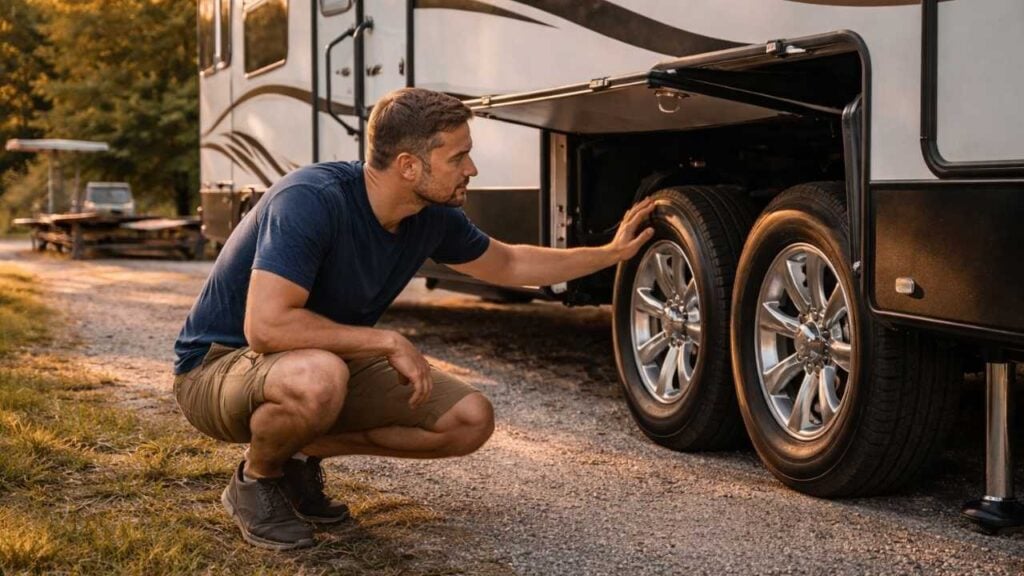
- Check DOT date codes and overall tire age
- Inspect for sidewall cracks, bulges, or uneven wear
- Verify lug nuts are torqued correctly
- Check the spare tire condition and mounting security
Brake and Electrical Connections
- Test the breakaway system and confirm the brakes engage
- Inspect the seven-pin connector for corrosion or damage
- Verify safety chains are present and properly secured
- Check brake controller wiring access and condition
Interior Fit, Finish, and Appliance Checklist
Walls, Floors, Cabinetry, and Furniture
- Look for bubbles, wrinkles, or lifting in wall coverings
- Inspect trim and corners for gaps or poor fitment
- Walk every floor section listening for squeaks or hollow spots
- Check slide-out flooring for level placement and stability
- Open every cabinet and drawer to verify smooth operation
- Gently test cabinetry for secure mounting
- Look for finish flaws such as drips, runs, or scratches
- Confirm drawer stops are working properly
Kitchen Systems
- Run the refrigerator on propane, electric, and auto modes if applicable
- Test all stove burners for proper ignition and even flame
- Check that the oven reaches and maintains temperature
- Verify microwave operation and secure mounting
- Test the range hood fan and lighting
- Run water at the kitchen sink and check pressure, temperature, and drainage
Bathroom Fixtures
- Flush the toilet several times to verify proper operation
- Test shower pressure and hot/cold mixing
- Inspect the sink and plumbing under the vanity for leaks
- Run the exhaust fan and check venting
- Test all bathroom GFCI outlets
Essential Systems Inspection
Electrical, Battery, and Solar Components
- Plug into the correct 30-amp or 50-amp shore power service
- Test every outlet with a small plug-in device
- Verify all interior and exterior lights work
- Check GFCI outlets trip and reset properly
- Inspect the breaker panel for correct labeling
- Disconnect shore power and confirm battery voltage is healthy
- Test lights, water pump, and 12-volt outlets on battery power alone
- Inspect battery hold-downs, cables, and disconnect switch
- If equipped, confirm the solar controller shows active power production
Plumbing, Tanks, and Water Systems
- Fill the fresh water tank and check sensor accuracy
- Turn on the water pump and listen for smooth operation
- Open every faucet and watch for pressure drops
- Inspect visible plumbing connections for leaks
- Test the water heater on both gas and electric
- Verify black and gray tank valves open and close smoothly
- Check tank sensors with empty and partially filled tanks
- Inspect drain piping for secure connections
- Check common leak points under sinks, behind the toilet, at the shower drain, and around the water heater
HVAC, Propane, and Climate Control
- Run the furnace through a full heating cycle
- Verify heat reaches all areas, including slide-outs
- Test thermostat response and blower operation
- Run the air conditioner and confirm cold airflow throughout
- Listen for unusual A/C vibrations or compressor noise
- Check propane connections for tightness and leaks
- Test the propane detector using the test button
- Verify automatic changeover between dual propane bottles if equipped
- Inspect the regulator for signs of malfunction or freezing issues
For Midwest buyers, furnace testing is critical. A heating failure during cold-weather travel can quickly become a serious problem. Ongoing support also matters, so it is smart to understand your dealer’s RV service capabilities before you take delivery.
Safety Systems and Red Flags That Signal Problems
Mandatory Safety Equipment Testing
- Test the smoke detector and check the expiration date
- Test the carbon monoxide detector and verify expiration
- Test the propane detector near floor level
- Confirm the fire extinguisher is charged and current
- Check emergency exit window operation and markings
- Test all exterior running lights, brake lights, and turn signals
Minor Issues
Small scratches, loose cabinet hardware, or minor trim alignment issues are usually quick dealer fixes and should still be documented before delivery.
Concerning Issues
Appliances not working, plumbing leaks, HVAC problems, binding doors or windows, or dead outlets should be repaired before you take the RV home.
Deal-Breaker Issues
Refuse delivery until resolved if you find soft spots suggesting water damage, frame or hitch damage, failed safety systems, delamination, or any propane smell or confirmed leak.
Final Walkthrough: Documentation and Delivery Confirmation
Required Paperwork Verification
- Title and registration documents are accurate
- Warranty documents are included and explained clearly
- Build sheet matches installed options and specifications
- Owner’s manuals are present for the RV and all appliances
- Completed PDI form is signed by the dealer technician
Required Accessories and Demonstrations
- Sewer hose and fittings are included and demonstrated
- Fresh water hose is provided
- Electrical adapters are included for campground hookups
- Leveling system or leveling blocks are explained
- Water pressure regulator is included
- All entry and compartment keys are accounted for
Final Operational Verification
- Take a brief test tow or confirm handling stability if possible
- Verify brake controller setup and operation
- Watch a full hitch and kingpin lock demonstration
- Test slide-out operation from inside and outside
- Deploy and retract awnings one more time
- Ask for a winterization process walkthrough if seasonal storage applies
Before leaving, take photos of the fifth wheel from every angle. These images help document delivery condition and can be useful for future warranty claims or service disputes.
Final Thoughts
A luxury fifth wheel is a major purchase, and your pre-delivery inspection is one of the best ways to protect it. Being thorough now can help you avoid preventable service issues, unexpected repairs, and frustrating first-trip problems later.
The goal is simple: verify that every major system works, every important safety component is functioning, and the unit you are taking home matches the quality and condition you were promised.
If you are still comparing available models before delivery day, you can browse Blue Compass RV Quad Cities’ fifth wheel inventory or explore more buying resources in the Blue Compass RV Quad Cities articles hub.
Continue Your Fifth Wheel Research
Fifth Wheel Inventory
Compare available fifth wheel models, layouts, weights, features, and price levels.
→
First-Time RV Buyer Guide
Review planning, towing, floorplan, budget, and ownership considerations.
→
RV Service
Learn about inspections, maintenance, warranty service, repairs, and seasonal preparation.
→
RV Articles and Resources
Explore more RV buying, ownership, travel, maintenance, and comparison guides.
→
Frequently Asked Questions About Fifth Wheel Pre-Delivery Inspections
Select a question to reveal or hide the answer.