

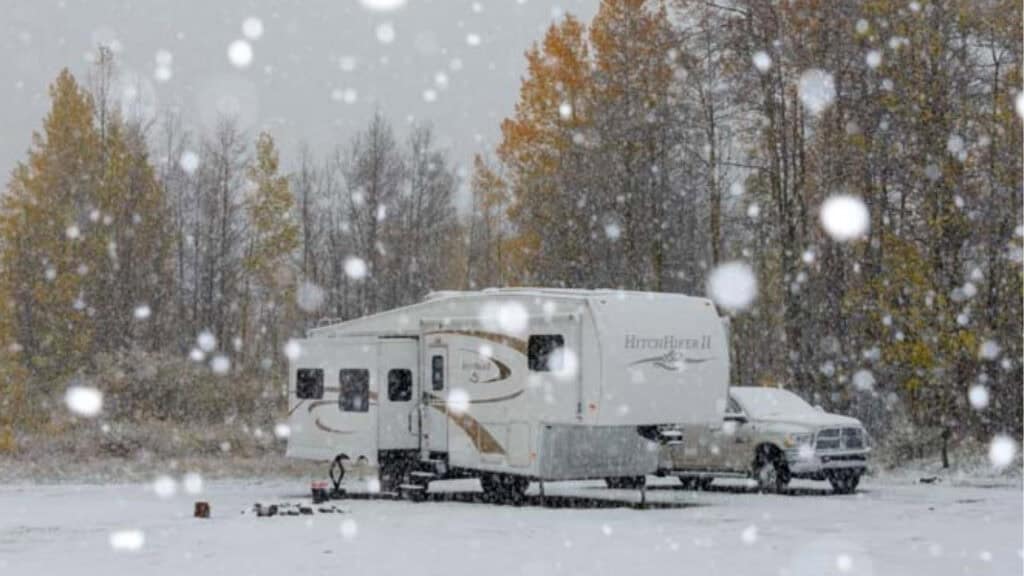
Winter camping has its charm, but when your destination trailer is staying in one place for the season, you need to keep it safe from freezing temps. These trailers feel more like tiny homes than weekend campers, which means they need a little extra care before the cold hits. This winterizing a destination trailer guide walks you through prepping your trailer for the freezing Iowa winter.
Why Destination Trailers Need Special Winterization Attention
Destination trailers are built for comfort. They stay put for long periods and often feature residential appliances, larger water systems, and more space to heat and protect. That extra comfort makes them great for long stays, but it also means they face more risk when the cold sets in.
A travel trailer that moves often gets drained, packed up, and tucked away. A destination trailer might sit in the same spot through the snow, sleet, and overnight freezes that are common in the upper Midwest. Without proper care, trapped water can turn to ice. Ice can break fittings, burst pipes, and lead to annoying repairs. Cold air can sneak into seams or vents. Even your power system can struggle if temperatures drop low enough.
Essential Tools and Supplies for Winterizing Your Destination Trailer
You do not need a huge toolkit. A few reliable items make the job much easier. The basics usually include:
- RV-safe antifreeze
- A water heater bypass kit if your model does not already have one
- A hand pump or built-in pump converter kit
- A water pressure regulator
- Sealant for outdoor seams
- Flashlight, gloves, and a set of screwdrivers
Some people also keep a small space heater on hand after winter prep is complete to help manage moisture. Make sure it is safe for indoor use. Many of these items can last for years, making your winter prep even easier since you won’t have to go out and get supplies time and time again.
Pre-Winterization Preparation and Safety Steps
A little prep leads to a smoother process. Start by cleaning the trailer. Wipe surfaces, empty cabinets, and take out anything that can freeze, crack, or spoil. Turn off propane and unplug from shore power. If you have a battery bank, switch everything off and take note of your current charge levels.
It also helps to pick a day with clear weather. Cold hands make simple tasks feel tough, and you want to be able to spot any leaks or cracks as you go. Walk around the exterior and look for worn seals or open gaps. These small checks help prevent winter wind from sneaking inside.
Complete Water System Winterization Process
Your water system is the heart of winter prep. Water expands when it freezes, so anything left in a pipe or tank can cause real damage. Begin by draining the fresh water tank, gray tank, and black tank. Open all faucets to let any leftover water escape.
Now it’s time to focus on the water heater. Step one is to turn it off. Let it cool fully if it has been running. Once cool, remove the drain plug and carefully open the pressure relief valve. A water heater bypass helps you skip filling the tank with antifreeze, which saves a lot of product. Turn the valves to “winterize” or “bypass” to keep any antifreeze from entering the tank.
Now you can bring out the antifreeze. If you use a hand pump, attach it to the city water inlet. If your trailer has a pump converter kit, flip it on and let the pump draw antifreeze into the lines. Open each faucet one at a time. Start with the closest to the pump and end with the farthest. When pink liquid comes through, you are set.
Do not forget the toilet and the outside shower, if your trailer has one. Pour a small amount of antifreeze into every drain to protect the P-traps.
Electrical System Winter Protection
Winter can be rough on power systems, especially in trailers that sit idle. Your main goal is to prevent drain, and protect components from cold strain.
Disconnect your batteries and bring them indoors if you are leaving for the season. A cool, dry place like a garage works well. Charge them fully before storage. If you stay in your trailer through winter, keep an eye on voltage levels and inspect connections often. Cold air can loosen fittings without warning.
If your trailer stays plugged in, check the surge protector and shore power cord. Look for any cracked insulation or worn spots that could worsen with ice or snow.
Exterior Winterization and Weather Protection
A big part of winter prep is shielding the exterior from harsh conditions. Start by washing the trailer. Dirt holds moisture, and moisture can turn into ice buildup. Once clean, inspect the roof, window seals, and trim. A fresh bead of sealant helps keep water out.
Your roof carries the most weight from snow. Make sure it is in top shape. If heavy snow is common in your area, check it often once winter hits. Clear off deep layers to prevent sagging.
Some add a skirt around the base of the trailer to block cold air from flowing underneath. Skirting is not required, but it can make a big difference in heat retention.
Interior Climate Control and Moisture Prevention
Inside, your goal is to keep the air dry. Moisture sneaks in through vents, small leaks, and even breathing if you stay in the trailer. Too much moisture can lead to mildew and a musty odor.
Bring in a dehumidifier or place moisture-absorbing tubs in key spots like the bathroom and kitchen. Keep cabinets open a bit to let air move. If you remain in the trailer through winter, run the heater at a steady level rather than letting temps swing up and down. Sudden drops invite condensation.
Remove bedding, clothes, or paper goods if you will be away for months. These items hold moisture and can develop mold if ignored.
Questions? Ask Blue Compass RV Quad Cities
Winter prep may feel like a lot the first time, but once you get the hang of it, the process becomes a smooth yearly habit. If you run into questions or if you want help picking the right supplies for your trailer, our team at Blue Compass RV Quad Cities is always ready to help. We want to help you be prepared for your next travel season, no matter the weather.