

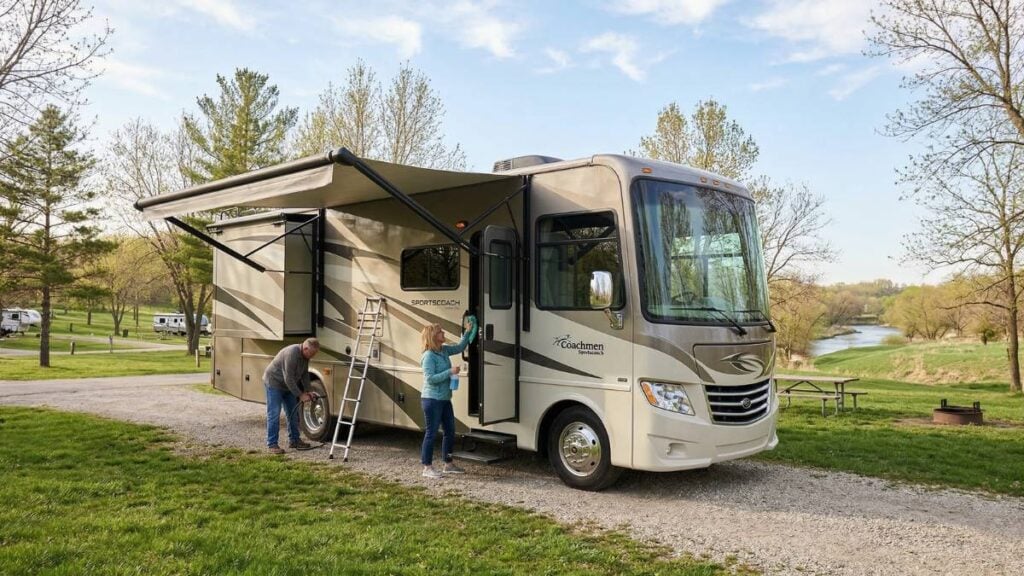
After months of winter storage, your RV needs more than a quick wash before hitting Iowa’s campgrounds. Those freeze-thaw cycles we get here in Walcott can wreak havoc on seals, roofs, and plumbing systems. That’s exactly why thorough spring prep makes the difference between safe travels and costly roadside emergencies. We’ve assembled this practical checklist to help you systematically inspect and prepare your RV for camping season.
Why Spring RV Maintenance Matters for Iowa Owners
Here in Walcott, spring RV maintenance protects your investment and keeps you from dealing with expensive breakdowns mid-season. The temperature swings between November and March create some pretty unique challenges for stored RVs. Water expands when it freezes, which can damage plumbing lines. Meanwhile, seals contract and let moisture sneak in, leading to wood rot and delamination issues.
Iowa state park campgrounds begin restoring full services (water, showers, and dump stations) around April 15 to May 1. Getting your spring prep completed early means you’re ready the moment camping season arrives. This systematic approach helps you catch small problems before they become wallet-draining repairs.
Most tasks on this checklist are straightforward inspections you can handle yourself. However, systems that need specialized tools or involve safety concerns (like propane testing, brake service, and electrical repairs) really benefit from professional attention. For complex systems, our RV service department handles everything from routine maintenance to complete system overhauls.
Exterior Inspection: Roof, Seals, and Body
Your RV’s exterior serves as the primary defense against weather and road debris. Winter conditions compromise these protective barriers, making spring inspection absolutely essential.
Roof and Seal Inspection
Start your inspection at the highest point. Your roof takes the worst beating from UV exposure, precipitation, and temperature swings.
Roof Inspection Tasks:
- Check entire roof surface for cracks, punctures, or soft spots
- Inspect all roof penetrations: vents, skylights, antennas, air conditioners
- Look for signs of ponding water or discoloration that screams “leak”
- Examine seams and lap sealant for cracking or separation
- Clean debris from roof valleys and vents
Walcott’s winter weather speeds up seal deterioration. If you spot cracking, peeling, or gaps wider than 1/8 inch, resealing prevents water intrusion. Make sure to use compatible sealants designed for your specific roof type. EPDM, TPO, and fiberglass each require different products.
Window and Door Seal Check:
- Inspect weatherstripping around all doors and windows
- Look for daylight visible through closed doors (that’s a red flag for poor sealing)
- Check window frames for separation from sidewalls
- Clean and condition rubber seals with appropriate protectant
- Test door latches and locks for proper operation
Walls, Slide-Outs, and Awnings
Sidewalls and slide-outs develop weak spots where movement and stress concentrate most.
Sidewall and Slide-Out Inspection:
- Walk around entire RV looking for delamination (bubbling or soft spots)
- Check slide-out seals at top, bottom, and sides
- Operate slide-outs fully, listening for unusual sounds
- Lubricate slide mechanisms with dry lubricant
- Inspect basement storage compartments for water damage or rodent intrusion
Awning Assessment:
- Extend awning completely and inspect fabric for tears or mold
- Check arms and hardware for damage or loose bolts
- Lubricate awning mechanism pivot points
- Test electric awning operation (if equipped)
- Clean fabric with appropriate RV awning cleaner
Tire, Brake, and Wheel System Check
Your RV’s tire, brake, and suspension systems handle tremendous loads. Proper maintenance prevents roadside emergencies and keeps handling safe.
Tire Pressure, Tread, and Age Assessment
RV tires lose pressure during storage and age regardless of how much tread remains.
Tire Inspection Checklist:
- Check all tires including spare for proper cold pressure (refer to sidewall rating)
- Inspect tread depth using penny test (Lincoln’s head should be partially covered)
- Look for cracking in sidewalls, particularly between treads
- Check date codes on sidewalls (four-digit number shows manufacture week/year)
- Examine valve stems for cracking or leaking
Replace RV tires at 5-6 years regardless of how the tread looks. Age-related rubber deterioration causes blowouts even when tires appear fine. If your tires are approaching this threshold, replacement before summer travels prevents dangerous failures.
Wheel and Lug Nut Check:
- Inspect wheels for damage, corrosion, or cracks
- Verify all lug nuts are present and properly torqued
- Look for rust staining around lug nuts (indicates looseness)
- Check wheel bearings by grasping tire top and bottom, rocking to detect play
Brakes, Bearings, and Suspension
Brake and suspension systems need real expertise to service properly. Visual inspection catches obvious issues, but comprehensive brake service requires professional equipment.
What You Can Inspect:
- Look through wheel spokes for brake pad thickness (if visible)
- Check brake fluid reservoir level (motorhomes only)
- Inspect brake lines for damage, corrosion, or leaking
- Test brake pedal feel (should be firm, not spongy – motorhomes only; trailers use electric brakes controlled by a brake controller)
- Examine suspension components for damage or excessive wear
Professional Service Recommended For:
- Complete brake inspection and pad measurement
- Wheel bearing repacking or replacement
- Brake fluid flushing and bleeding
- Suspension component replacement
- Brake controller calibration
These systems directly impact safety. Our professional RV service technicians have specialized tools and experience to thoroughly evaluate and service braking components.
Plumbing System De-Winterization
Removing antifreeze and restoring your water system takes systematic flushing and testing.
Flushing Antifreeze and Preparing the Water Heater
Before introducing fresh water, you need to completely purge antifreeze from all lines.
De-Winterization Steps:
- Connect to fresh water source or fill fresh tank
- Open all faucets (hot and cold) until water runs clear without pink tint
- Run water through shower, toilet, and outside shower
- Flush hot water heater by removing drain plug and rinsing thoroughly
- Replace water heater anode rod if heavily corroded
- Reconnect drain plug with new washer, fill tank, and test for leaks
Fresh Tank and Filter Service:
- Sanitize fresh water tank with bleach solution (1/4 cup per 15 gallons)
- Let solution sit 4 hours, then drain and flush thoroughly
- Replace inline water filters
- Clean debris from city water inlet screen
- Test tank level sensors for accuracy
Testing for Leaks and Pump Function
Once lines are flushed, systematic testing identifies leaks before they cause damage.
Leak Detection Process:
- Close all faucets and ensure no fixtures are running
- Pressurize system via city water or water pump
- Check all visible connections, valves, and fixtures for drips
- Inspect underneath RV for water dripping from plumbing
- Monitor water pump for short-cycling (this indicates a leak)
- Test toilet seal by adding water to bowl, checking for leaking underneath
Water Pump Check:
- Verify pump primes and builds pressure smoothly
- Listen for unusual noises or vibration
- Test pressure switch cutoff (pump should stop when pressure is reached)
- Check accumulator tank (if equipped) for proper air pressure
Address any leaks right away. Water damage spreads fast in enclosed RV spaces and leads to expensive floor, wall, and ceiling repairs.
Electrical Systems and Battery Maintenance
Reliable electrical systems keep appliances running and ensure critical safety equipment functions properly.
Battery Service:
- Clean battery terminals and cables with wire brush and baking soda solution
- Check fluid levels in flooded batteries, adding distilled water if needed
- Test battery voltage (12.6V+ indicates full charge for 12V system)
- Load test batteries to verify capacity under draw
- Inspect battery box for corrosion or damage
- Ensure batteries are securely mounted
Electrical System Check:
- Test all interior and exterior lights for operation
- Verify turn signals, brake lights, and running lights work properly
- Check GFCI outlets throughout RV using test button
- Inspect shore power cord for damage or burned prongs
- Test converter/charger operation when plugged into shore power
- Run generator (if equipped) under load for 30 minutes
Battery deterioration isn’t always obvious until you’re boondocking. Batteries typically last 3-5 years for flooded lead-acid and 4-7 years for AGM types. Weak batteries benefit from replacement before camping season starts.
For electrical issues beyond basic inspection (like inverter problems, converter failures, or wiring repairs), professional diagnosis prevents further damage and safety hazards.
Interior Systems, Appliances, and Safety Equipment
Interior systems and safety equipment require functional testing to ensure comfort and protection during travel.
Appliance Testing:
- Test refrigerator operation on both LP gas and electric
- Run air conditioner, checking for proper cooling and unusual sounds
- Operate furnace through full heating cycle
- Check stove and oven ignition and flame pattern
- Test water heater on both gas and electric modes
- Verify range hood fan and microwave operation
Safety Equipment Inspection:
- Replace smoke detector and CO detector batteries
- Test detector alarm functions using test buttons
- Check fire extinguisher pressure gauge (needle should be in green zone)
- Inspect emergency exit windows for proper operation
- Verify LP gas detector functionality (typically located near floor)
- Test emergency breakaway switch on trailer brake system
LP Gas System Check:
- Inspect LP tanks for damage, rust, or expired certification dates
- Check for gas smell around tank connections and regulator
- Verify all appliances light and maintain steady flame
- Look for spider webs or debris in burner tubes
LP gas system issues require professional leak testing with specialized equipment. Never use matches or lighters to check for leaks. Professional technicians use electronic detectors or bubble solution to safely identify leaks.
General Interior Maintenance:
- Check ceiling, walls, and floors for water damage or soft spots
- Test all cabinet latches and drawer slides
- Lubricate entry door hinges and locks
- Clean and condition leather or vinyl upholstery
- Vacuum and clean all living spaces, checking for pest evidence
Schedule Your Spring Service at Blue Compass RV Quad Cities in Walcott
While this checklist covers essential owner-performed maintenance, professional spring service catches issues DIY inspection might miss. We understand exactly how local weather impacts recreational vehicles.
Why Schedule Professional Service:
- Comprehensive propane system leak testing with professional equipment
- Brake and bearing service using proper torque specifications
- Electrical system diagnosis with specialized testing tools
Book your spring service before Memorial Day to avoid peak-season delays. Our service department handles spring RV maintenance in Walcott, IA for all makes and models, whether you purchased from us or not.
Ready to prepare your RV for Iowa’s camping season? Call us at (800) 397-5673 or contact us to schedule your spring maintenance appointment. Our team ensures your RV is road-ready for the adventures ahead.