
Ever wondered if you can just hop behind the wheel of a massive RV without extra paperwork? Plenty of folks heading out on the open road ask this same question. The answer is a bit muddy depending on where you live and how big your rig is. Learning the rules before you pack up and hit the highway can save you from a traffic stop ruining your vacation. Our team at Blue Compass RV Quad Cities in Walcott, Iowa, has outlined everything you need to know about licenses before you head out on your next big adventure.
What Constitutes a Special License?
A special license is anything beyond your basic one. This includes commercial driver’s licenses (CDLs), noncommercial Class A or B licenses, or endorsements on your regular license. Your license requirements depend on your RV’s weight, length, and purpose. Bigger rigs need higher credentials.
Most RV owners can use their regular license. If your vehicle is under 26,000 pounds, you’re usually fine with your standard license. This applies to motorhomes or travel trailers. Most states don’t require special licenses for personal RV trips, but it’s a good idea to check your state’s rules to make sure.
State-by-State Requirements for RV Licenses
Most states keep RV rules simple, but a few have strict regulations. Check the rules for each state on your route before traveling. Getting pulled over with the wrong license can ruin your vacation fast. States fall into three groups: those with minimal requirements (most states), those strict about big rigs, and those requiring special paperwork for certain RVs.
For example, California requires a noncommercial class B license for RVs over 40 feet. Nevada demands a class B license for vehicles exceeding 26,001 pounds. Rules differ between motorhomes and trailers too. Some states focus on one type, and combinations (such as towing a boat behind your motorhome) might need different licenses.
States Requiring a CDL
A few states require CDLs for certain RVs, which is the same license truckers need. While CDLs typically apply to commercial hauling, some states have decided the biggest RVs need similar skills. This mainly applies to RVs that are longer than 45 feet.
Hawaii requires a CDL for vehicles exceeding 26,000 pounds, including large motorhomes. Connecticut demands one if your vehicle tops 26,001 pounds or your combined rig weighs over 40,001 pounds. Washington D.C. applies similar rules for commercial-weight RVs over 26,001 pounds, while Wisconsin requires a CDL for RVs longer than 45 feet.
Many states with CDL rules make exceptions for personal use. The forms often ask if you’re using the RV commercially or just for family trips. This matters because personal use might qualify for a noncommercial license that’s easier to get. Always check your state’s specific requirements before assuming you need a CDL.
States That Don’t Require Any Special Licenses
The good news for RV owners is that most states keep it simple. Your regular driver’s license is sufficient for most motorhomes and travel trailers, with no extra tests, fees, or classes required. This makes the RV lifestyle less daunting for beginners. You can buy your dream rig and drive it home the same day with your current license.
Even these relaxed states have limits. The 26,000-pound threshold is common nationwide. Exceed it, and you might need upgraded credentials. This limit makes sense because larger rigs have longer stopping distances and wider turning angles, requiring more skill to drive safely.
But just because you can legally drive an RV, doesn’t mean you should without preparation. Take a driving course, practice in empty lots, or watch training videos before hitting Iowa’s highways. Your fellow travelers will appreciate it.
How To Obtain a Special License for Driving an RV
If you need a special license for your rig, check your state’s specific requirements first. Gather your documents (ID, proof of residency, current driver’s license), get study materials, and prep for tests.
Tests vary by state. California’s class B noncommercial license (for vehicles over 26,000 pounds or towing more than 10,000 pounds) requires knowledge and driving tests. You’ll learn big-vehicle rules, then prove you can handle a rig in traffic. Be ready to demonstrate backing, turning, and emergency stopping.
Many drivers fail on basics such as mirror checks or pretrip inspections. Consider renting a similar vehicle to practice, joining an RV club for training, or hiring a coach. As a bonus, insurance companies often discount rates for drivers with formal training.
Find Your Perfect Rig at Blue Compass RV Quad Cities
RVing offers the freedom to explore our country. Nothing beats waking to new views daily or chasing fair weather and fun events. But this freedom comes with responsibility: you must be able to handle your home-on-wheels safely. Learn proper driving techniques, know your vehicle’s limits, and follow state rules.
Looking for the perfect RV? Visit us at Blue Compass RV Quad Cities in Walcott to explore our wide range of models. We have everything from starter campers to luxury motorhomes, and our team can offer expert advice on maintenance and trip planning. We can’t wait to help you hit the open road.
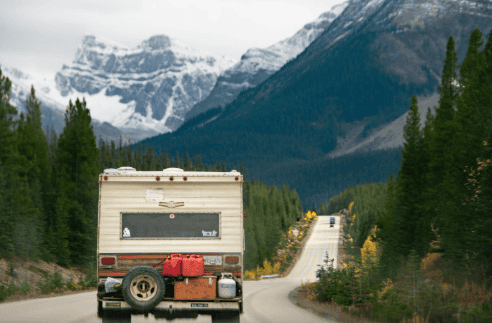
a truck driving down a road with mountains in the background by Farzn Dehbashi is licensed with Unsplash License