

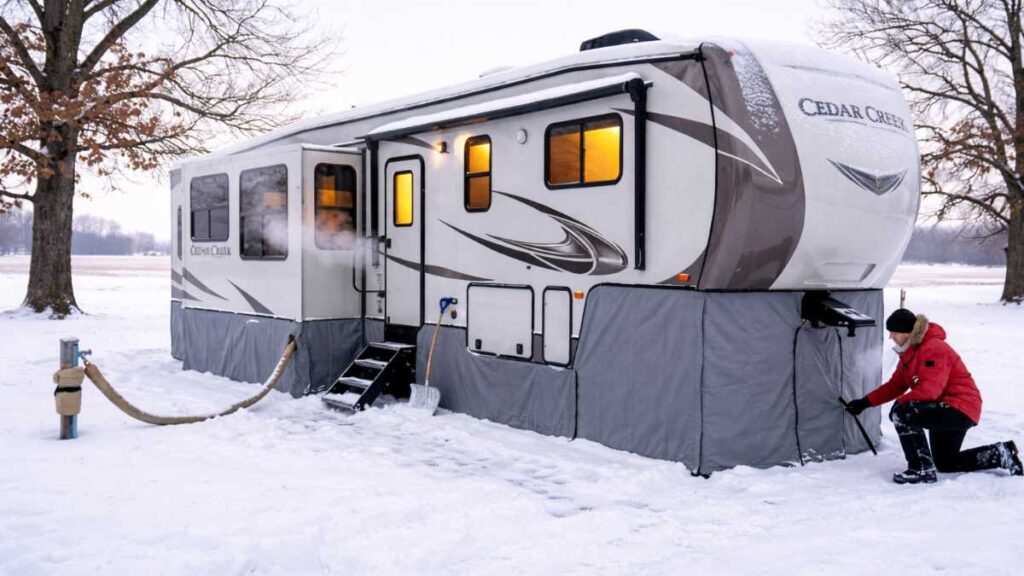
Winter camping in Iowa can be incredible—quiet campgrounds, snow-covered landscapes, and no crowds. But it also comes with a reality many RV buyers are not told upfront: true four-season RVs are extremely rare.
If you have been researching the best RV for Iowa winters, you have probably seen the term four-season RV everywhere. The truth is that most RVs marketed that way are better described as extended-season campers. They can handle cold weather with the right equipment and preparation, but they are not built to perform like a house in sustained subzero Midwest conditions.
Bottom line: The right RV matters, but your winter setup matters just as much. A well-prepared extended-season camper can outperform an unprepared “four-season” unit when Iowa temperatures really drop.
Why “Four-Season RV” Is Mostly a Myth
Iowa winters are demanding. Temperatures regularly drop below zero, wind chill cuts through even well-built campers, and freezing conditions can linger for days or weeks at a time.
Many RVs labeled as four-season include upgrades such as improved insulation, heated or enclosed underbellies, and larger furnaces. Those features absolutely help—but they do not make an RV immune to extreme cold.
So, do true four-season RVs really exist? Technically, yes. But they are usually limited to high-end fifth wheels and luxury motorhomes, and even those often need extra preparation in real-world winter conditions.
What Most RVs Really Are: Extended-Season Campers
A more accurate description for most towable RVs is extended-season RV or 3- to 3.5-season camper. These units are generally designed for:
- Spring through fall camping
- Occasional freezing temperatures
- Short cold-weather trips
Without proper preparation, even well-equipped RVs can still run into serious winter problems, including:
- Frozen water lines and holding tanks
- Rapid propane consumption
- Heat loss through floors, walls, and windows
- Interior condensation and moisture buildup
What Features Matter Most for Winter RV Camping in Iowa?
If you are shopping for a cold-weather RV in Iowa, these are the features worth paying close attention to.
Insulation Packages
Look for multi-layer insulation in the walls, roof, and floors. Good insulation slows heat loss and helps the furnace maintain interior comfort, though it still has limits in extreme cold.
Enclosed & Heated Underbelly
This is one of the biggest winter-use advantages you can get. It helps protect tanks and plumbing, and it is often warmed by furnace ducting.
Important: If your furnace cannot keep up, your plumbing can still freeze even with a heated underbelly.
High-BTU Furnace (30K–35K+)
A stronger furnace is critical for staying comfortable inside the coach and for supporting underbelly heat in freezing weather.
Dual-Pane Windows
When available, dual-pane windows can reduce heat loss and help manage condensation—two common pain points in winter camping.
What Actually Makes Winter RVing Work
Here is the part many articles gloss over: cold-weather success depends more on your setup than the RV itself.
RV Skirting
Skirting is often the single biggest improvement you can make. It blocks wind under the RV, traps warmer air beneath the unit, and helps protect plumbing and tanks.
Heat Tape & Insulated Water Lines
These are essential for longer stays in freezing temperatures. They help prevent frozen hookups and reduce the risk of losing access to water when conditions get rough.
Supplemental Heat — Use Carefully
Portable electric space heaters are common in winter RV setups, but they need to be used with care. Most heaters draw 1,200 to 1,500 watts, and RV electrical systems—especially 30-amp service—have limited capacity.
Running multiple high-draw appliances at the same time can trip breakers or overload circuits. Used improperly, supplemental heat can create a serious fire hazard.
Best practices include:
- Know your RV’s electrical limits
- Avoid running multiple high-wattage appliances at once
- Use properly rated outlets and cords
- Never leave heaters unattended
Interior Cold-Weather Prep
- Use thermal window coverings
- Add rugs or carpet for floor insulation
- Open cabinets near plumbing to circulate warm air
Best RVs for Iowa Winter Camping: Realistic Options
While no RV is truly winter-proof, some models perform better than others when temperatures fall.
Forest River Flagstaff Super Lite
- Heated and enclosed underbelly
- 35K BTU furnace
- Optional dual-pane windows
Why it stands out: A strong travel trailer option for cold-weather camping.
Cherokee Arctic Wolf Fifth Wheel
- Heated underbelly and tanks
- Enhanced insulation package
- Designed for extended-season use
Why it stands out: Better suited for longer cold-weather stays when paired with proper setup.
Forest River Cedar Creek
- Residential-style construction
- Higher-end insulation and materials
- Better suited for extended or full-time use
Why it stands out: One of the closest towable options to true cold-weather capability.
You can also support this section with internal links to your relevant inventory or model pages if available, such as Flagstaff RVs, Cherokee fifth wheels, Cedar Creek RVs, or your broader new and used RV inventory in Walcott.
Can You Use an RV in Below-Freezing Temperatures?
Yes—but it depends on three things: the RV’s construction, your preparation, and how closely you monitor your systems.
- 20°F to 30°F: Usually manageable for many extended-season RVs
- 0°F to 20°F: Requires preparation, monitoring, and realistic expectations
- Below 0°F: Challenging even for high-end units
Can a Standard RV Be Upgraded for Winter Camping?
Yes—to a point.
You can improve cold-weather performance with:
- Skirting
- Heat tape
- Insulated hoses
- Thermal window coverings
Those upgrades can make a noticeable difference, but they do not turn a standard RV into a true four-season unit.
Final Thoughts: What Actually Works
After helping Midwest campers for more than 60 years, the honest answer is simple: there is no set-it-and-forget-it winter RV.
Some RVs are far better equipped than others, but preparation is what makes the biggest difference. The real key is pairing the right RV with the right winter setup for how you actually camp in Iowa.
Looking for a Winter-Capable RV in Iowa?
At Cheyenne Camping Center in Walcott, we focus on real-world performance—not marketing hype. We can help you compare floorplans, insulation packages, underbelly protection, furnace capacity, and the practical upgrades that matter for Midwest camping.
Browse our new RV inventory, explore our used RV inventory, or contact our team for honest guidance.
Frequently Asked Questions About Winter RV Camping
Do true four-season RVs really exist?
They do, but they are rare. Most RVs marketed that way are better described as extended-season units that still need preparation for sustained subzero conditions.
What is the difference between a four-season RV and an extended-season RV?
A four-season RV is marketed for year-round use, while most towable RVs are more realistically extended-season units built for moderate cold with limited winter capability.
What features matter most for winter RV camping in Iowa?
Quality insulation, a heated and enclosed underbelly, a high-BTU furnace, protected plumbing, and dual-pane windows when available make the biggest difference.
Can you use an RV in below-freezing temperatures?
Yes, but it requires proper setup, careful monitoring, and realistic expectations about how the unit will perform in prolonged cold.
Can a standard RV be upgraded for winter camping?
Yes. Skirting, heat tape, insulated hoses, and interior insulation measures can help, but they usually do not make a standard RV perform like a purpose-built cold-weather model.
Are portable space heaters safe to use in an RV?
They can be, but only when used properly. Always understand your RV’s electrical limits, avoid overloading circuits, and never leave heaters unattended.