

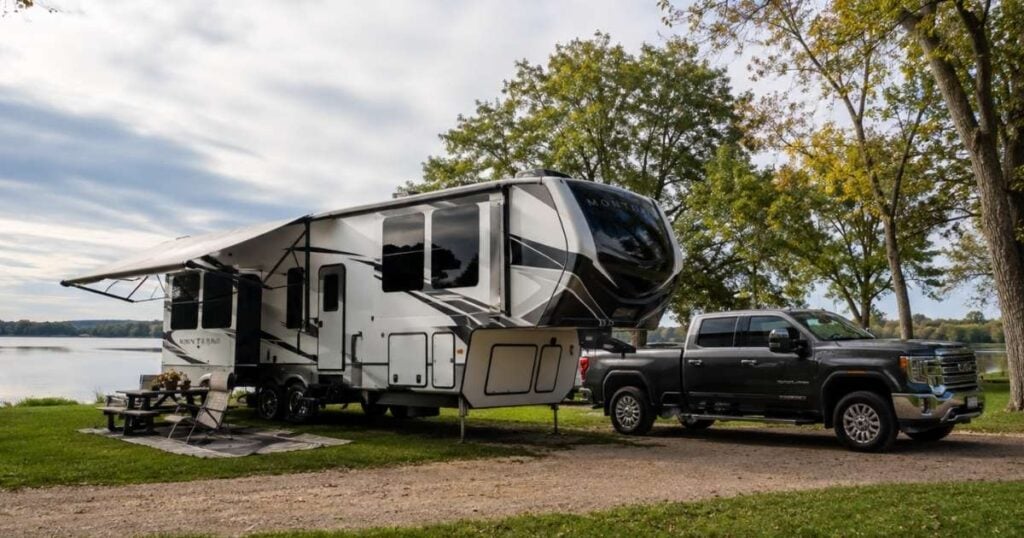
How you actually live in your RV is what should drive this decision. The floor plan you choose affects your morning coffee routine, how comfortable guests feel on a weekend trip, and just about everything in between. We’ve walked hundreds of buyers through this exact front living vs. rear kitchen fifth wheel comparison at Blue Compass RV Quad Cities in Walcott, Iowa, and the right answer is almost never obvious at first glance.
We carry both layouts across our new and used inventory, and we’ve seen firsthand how the wrong floor plan can frustrate even the most enthusiastic camper after a few trips. Before you commit, it’s worth understanding what each layout actually delivers. Take a few minutes to browse our new fifth wheel inventory while you read through the comparison below.
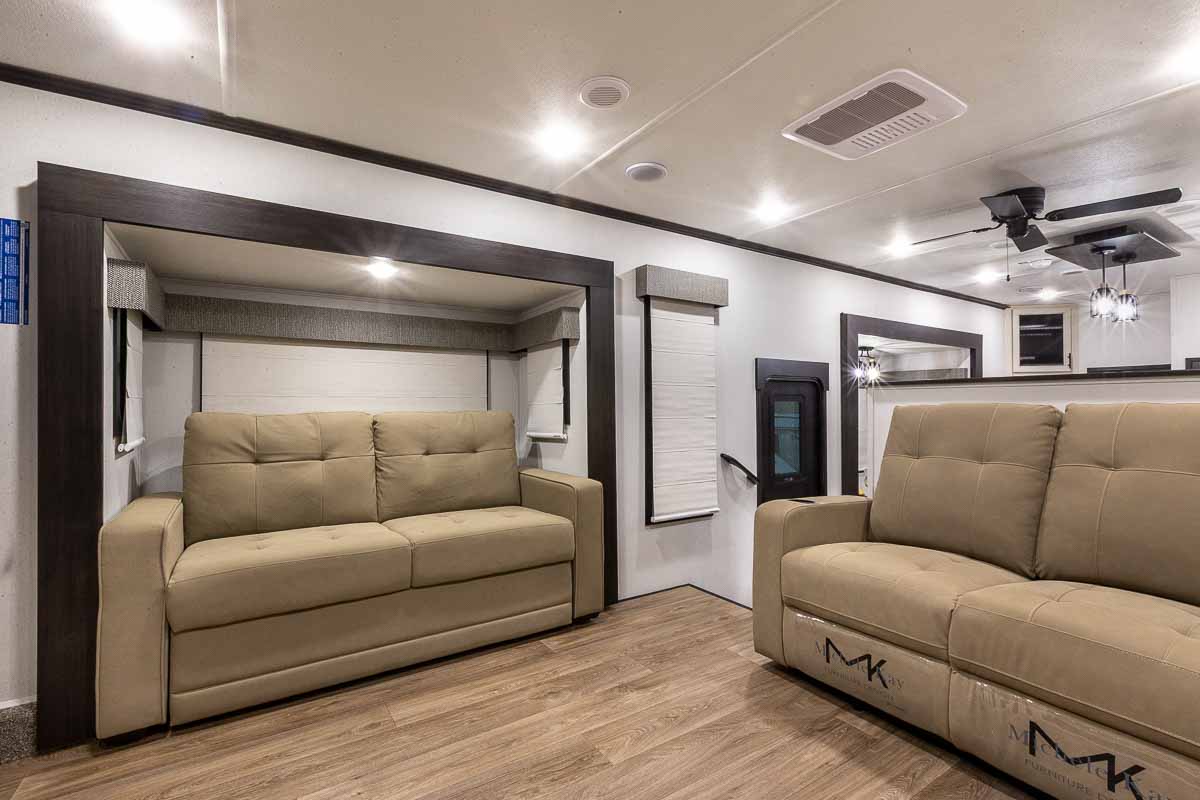
Front Living Prioritizes the Lounge
A separate entertaining space, residential seating, and stronger separation between the lounge and bedroom.
Rear Kitchen Prioritizes Cooking
Concentrated counters, pantry storage, grouped appliances, and a more open central living arrangement.
What Sets Front Living and Rear Kitchen Fifth Wheels Apart
These two layouts represent two different philosophies about what matters most inside a fifth wheel. One treats the lounge as the centerpiece; the other puts the kitchen there. That single design decision shapes everything else about the floor plan, including counter space, bedroom privacy, and how traffic moves through the living area.
Living Space, Seating, and Entertainment Compared
If you spend significant time inside your fifth wheel, whether from rain, extreme heat, or extended stays at one site, the front living layout delivers a noticeably more residential feel. The elevated lounge creates a defined room rather than just a seating zone. Theater seating or a full sofa, paired with a large entertainment center at the focal point, makes it easy to settle in for the evening without feeling cramped.
Rear kitchen fifth wheels trade that dedicated lounge experience for something more open and communal. The seating area is typically smaller and less defined, but the overall space feels less segmented. For a couple who eats together, cooks together, and doesn’t need a formal entertaining zone, that openness can feel more livable than a structured lounge. The trade-off is real, though: if you host guests regularly or want a clear living room environment, the rear kitchen layout may leave you wanting more.
See Which Living Space Feels Right
Sitting in both layouts reveals differences that specifications and floorplan drawings cannot fully communicate.
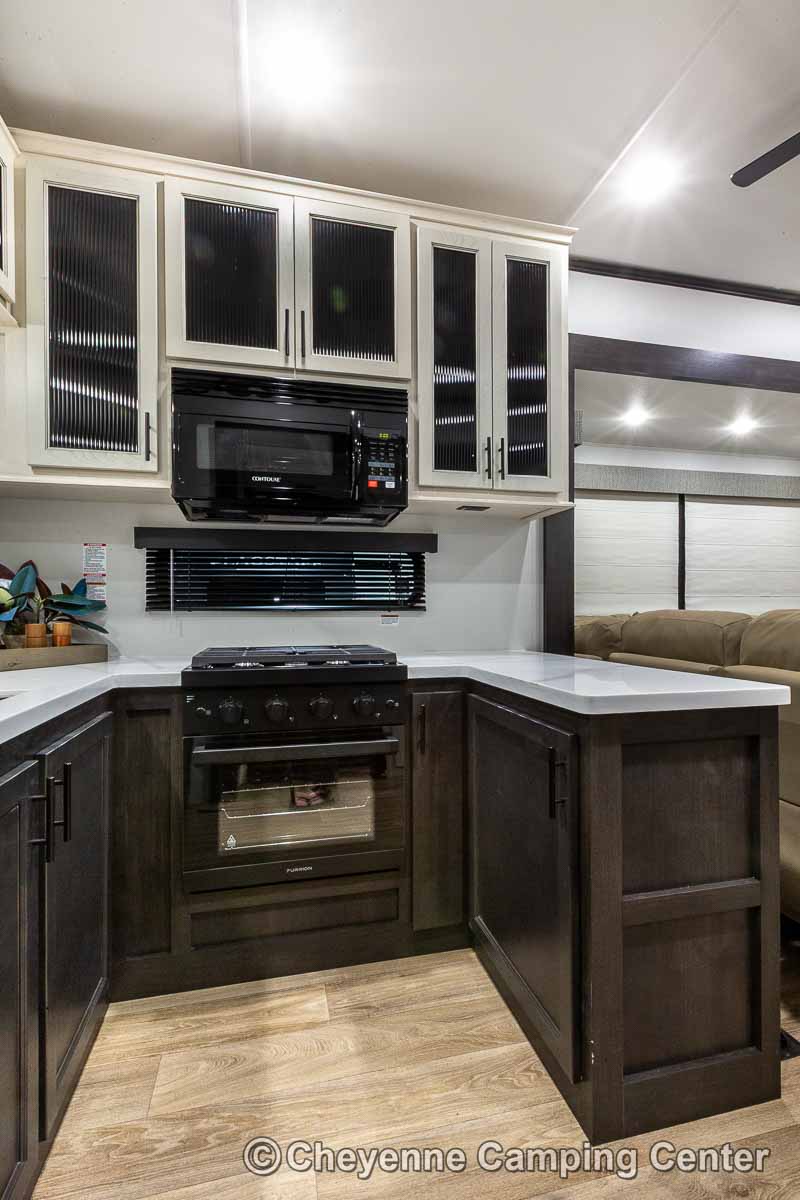
Kitchen Workflow and Cooking Comfort in Each Layout
This is where the rear kitchen layout earns its strongest marks. When the appliances, sink, and prep counter all sit at the same end of the fifth wheel with the pantry right there, cooking just works better. You’re not crossing traffic to grab something, and the rear wall gives manufacturers more space to work with. For full-time RVers or anyone who cooks real meals regularly, this concentration of kitchen resources makes a meaningful difference.
The mid-fifth wheel kitchen in a front living layout is functional, but it sits between two rooms rather than anchoring one. Counter space tends to be more limited, and traffic flow through that area competes with kitchen use. It supports the floor plan without defining it. If cooking is more about convenience than craft for you, this distinction may not matter much.
Bedroom Privacy, Storage, and Daily Livability
Front living fifth wheels excel at one specific livability factor: separation. The bedroom sits at the opposite end from the lounge, which means guests watching a movie up front don’t disturb someone sleeping in the back. For families, couples with different sleep schedules, or anyone who entertains regularly, that physical distance is genuinely useful and worth planning around.
Rear kitchen layouts don’t offer the same separation. The sleeping area tends to sit closer to the main living zone, which works fine for a couple traveling alone but can feel less private in social situations. Storage also follows the layout philosophy: front living models tend to distribute storage through the lounge area and mid-fifth wheel pantry buffer, while rear kitchen versions concentrate storage near the kitchen, efficient for cooking but not necessarily for everyday items.
Towing Length, Weight Distribution, and Hauling Considerations
Length is only part of the towing equation. Hitch weight and dry weight matter more, and both need to align with your truck’s payload rating. Front living fifth wheels tend to run larger on all of those dimensions, and slide count adds to the complexity. Most exceed 40 feet and 12,000 lbs dry weight, though lighter and shorter front living options do exist.
To put a real number to it: the 2026 Forest River Sabre 37FLH carries a dry weight of 12,640 lbs and a hitch weight of 2,515 lbs. That’s a significant towing commitment and a realistic representation of what many front living floor plans demand from your truck. Not every half-ton pickup is rated to handle that safely, so confirming your truck’s payload capacity before falling in love with a specific floor plan is essential.
Rear kitchen fifth wheels are frequently produced in more compact configurations. This is a real advantage for buyers with half-ton trucks or who prefer a more manageable footprint at the campsite. If your tow vehicle has limitations or you’re not comfortable maneuvering a 40-plus-foot fifth wheel, rear kitchen layouts give you more workable options. You can browse our used inventory to see both layouts at various weight and length specs.
Truck payload, hitch weight, passengers, cargo, and loaded trailer weight all matter. Do not rely on advertised maximum tow capacity alone.
Who Each Floor Plan Fits Best
Front living room fifth wheels are generally less common in the broader market than rear kitchen models, so it’s worth being deliberate if that layout is the right fit for you. Both designs have a clear buyer profile, and most people we talk to find their answer quickly once they’ve walked through both.
| Layout Type | Living Area Location | Kitchen Location | Bedroom Access | Best For | Towing/Weight Notes |
|---|---|---|---|---|---|
| Front Living | Front (elevated) | Mid-fifth wheel | Rear | Entertainers, families, full-timers needing privacy | Often 40+ ft, 12,000+ lbs dry |
| Rear Kitchen | Forward/mid | Rear | Mid-to-front | Frequent cooks, couples, half-ton owners | Frequently more compact, lighter |
Front Living Room: Ideal Camper Profiles
The front living room fifth wheel makes the most sense if you want a defined, separate space for entertaining. It’s the right choice for buyers who host guests at the campsite, need bedroom privacy from social spaces, or want their fifth wheel to feel like a house rather than a trailer. Families who need sleeping areas clearly separated from common living space will find this layout delivers in ways that rear kitchen models simply don’t.
If you’re a full-time RVer who works remotely, holds video calls, or simply wants to sprawl out on a proper sofa after a long day outside, the lounge-forward layout earns its keep in those everyday moments.
Rear Kitchen: Ideal Camper Profiles
The rear kitchen fifth wheel belongs on your shortlist if cooking is central to your camping experience. Frequent cooks will appreciate having appliances and prep space grouped at the rear. The workflow is intuitive, and the back-wall configuration gives manufacturers room for generous counter space that mid-fifth wheel kitchens can’t match.
Couples and smaller families who don’t need a formal entertaining zone will find the rear kitchen layout more practical for daily use. Half-ton truck owners benefit from the fact that these models often come in lighter and shorter configurations. Full-time RVers who think of the kitchen as the center of home life will feel right at home here, especially during long stretches at one campsite.
Continue Your Fifth Wheel Research
Compare Fifth Wheel Floor Plans at Blue Compass RV Quad Cities
We help buyers in Walcott, Iowa and across the country work through decisions like this one. Our team is here to help you find the floor plan you’ll actually enjoy living in, whether you’re planning a trip next weekend or living in your fifth wheel full-time.
Walking through both layouts in person makes a real difference. Reading about them is useful, but standing in the kitchen, sitting in the lounge, and walking back to the bedroom tells you something no article can fully replicate. Our inventory includes front living and rear kitchen fifth wheels in a range of sizes, and our team can help you match a specific floor plan to your tow vehicle and how you actually camp.
If you’re ready to take the next step, contact our team to set up a walkthrough or ask questions before you make the trip. We’re open Monday through Saturday from 8:00 AM to 5:00 PM and reachable at (563) 284-6868. No pressure, no runaround, just honest answers about what will actually work for you.
Compare Both Layouts in Person
Walk through front living and rear kitchen fifth wheels side by side and see which layout better fits your daily routine.
Frequently Asked Questions
Select a question to reveal or hide the answer.