

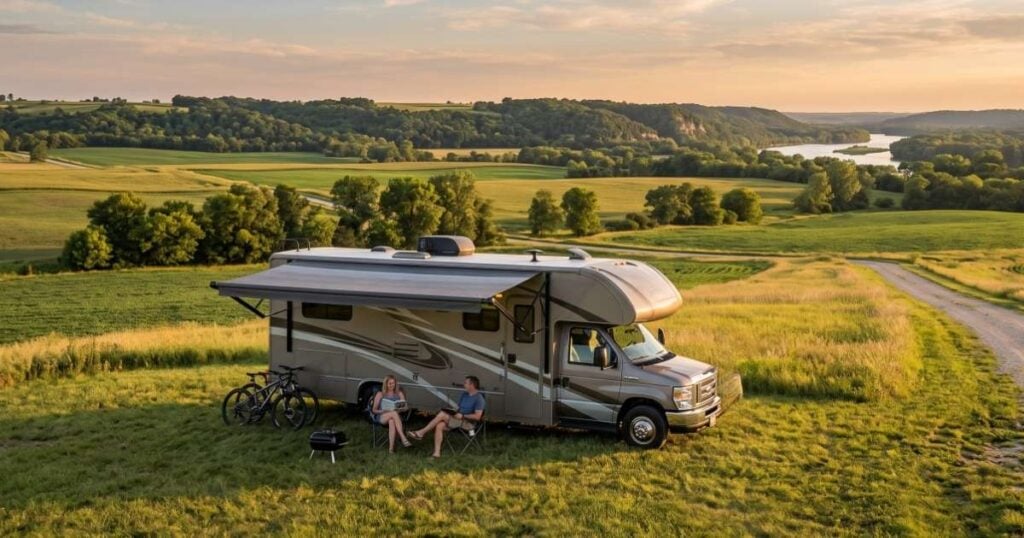
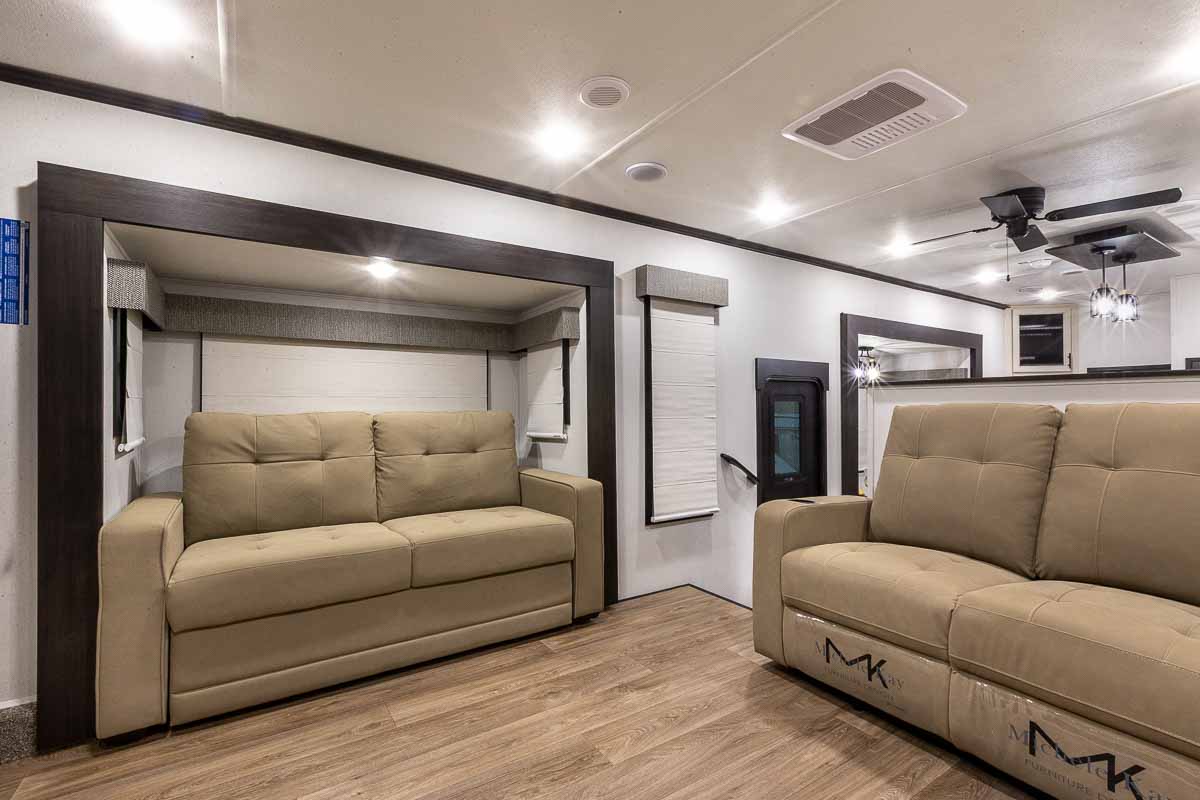
Deciding whether to rent or buy an RV in Iowa feels straightforward until you actually start running the numbers. For Iowa families who love the outdoors, the answer really comes down to your travel habits and your budget, plus an honest assessment of how often you actually hit the road. If ownership is starting to make sense, browse our new RVs to see what’s available at Blue Compass RV Quad Cities in Walcott, Iowa.
This guide breaks down the real numbers on both sides so you can make a decision that fits your life, not just your wishlist.
Occasional and First-Time Campers
Lower commitment, easier experimentation, no annual storage obligation, and the flexibility to choose different RV types for different trips.
Frequent and Extended-Trip Campers
Familiar space, easier spontaneous travel, no repeated rental fees, and a lower per-trip cost as annual usage increases.
Why Iowa Campers Are Asking: Rent or Buy?
RV travel has grown steadily across Iowa, and it’s easy to see why. The state offers genuinely beautiful camping country, with wooded bluffs along the Mississippi River and sprawling lake areas in the northwest. As more families discover the appeal, the question of whether to rent or own comes up constantly, whether you’re talking to someone at a campground or a dealership.
First-timers want to test the lifestyle before committing. Seasoned campers are wondering whether cumulative rental costs are approaching what ownership would have cost. This is ultimately a financial question, and getting the numbers right can save you thousands.
Breaking Down the True Cost of Renting a Camper in Iowa
Renting might look affordable at first glance, but the final invoice rarely matches the listed nightly rate. Understanding the full cost before you book is the best way to avoid sticker shock.
Travel Trailers and Pop-Ups
$50–$150
Approximate nightly range
Class B Camper Vans
$100–$250
Approximate nightly range
Class C Motorhomes
$130–$250
Iowa averages may run $130–$179
Class A Motorhomes
$200–$400+
Some Iowa listings reach $250–$450
Average Nightly Rental Rates by Camper Type
Iowa rental prices vary considerably by unit type:
- Travel trailers and pop-ups: roughly $50–$150/night nationally; some Iowa listings start lower.
- Class B camper vans: $100–$250/night.
- Class C motorhomes: $130–$250/night; Iowa averages often fall in the $130–$179 range.
- Class A motorhomes: $200–$400/night nationally; some Iowa listings reach $250–$450/night.
General Iowa rental listings on peer-to-peer platforms often start around $70–$95/night, with averages closer to $95–$159/night depending on the unit and season. Summer and holiday weekends near Des Moines, the Quad Cities, and along the I-80 corridor push rates higher.
Hidden Fees That Add Up Fast
The advertised nightly rate rarely tells the whole story. Cleaning fees are nearly universal. Security deposits tie up cash during your trip. Mileage overages catch many renters off guard: some rentals cap mileage and charge overage fees, with overages running $0.35–$0.50 per mile on some motorhomes.
Insurance add-ons, generator usage fees, bedding or kitchen kit rentals, and roadside assistance packages can each inflate your total meaningfully. Weekly discounts often kick in at six or more nights, which can offset some of these costs on longer trips. Always request a full cost breakdown before confirming.
The advertised nightly rate is only the starting point. Ask for the full trip total, including cleaning, insurance, mileage, generator use, roadside assistance, taxes, and equipment packages.
What It Actually Costs to Own a Camper in Iowa
Purchase price is only where the spending starts. True ownership costs include everything that follows.
Insurance
Coverage varies by RV type, value, usage, and whether the unit is towable or motorized.
Storage
Typical off-site storage estimates range from approximately $50–$250 per month.
Routine Upkeep
Budget for inspections, seals, tires, winterization, appliance service, and preventive care.
Financing, Insurance, and Storage Costs
Most Iowa RV buyers finance their purchase, making monthly loan payments the largest ongoing expense. Insurance runs roughly $500–$2,000 per year, depending on unit type and coverage level, with travel trailers generally less expensive to insure than drivable motorhomes.
Storage is another cost many buyers underestimate. Not everyone has driveway space for an RV year-round, and Iowa winters make off-site storage nearly essential. Monthly storage fees typically run $50–$250, meaning $600–$3,000 per year just to keep the unit protected during the off-season.
Maintenance, Repairs, and Annual Upkeep
Budget roughly $1,500–$2,000 per year for routine maintenance: roof inspections, seal checks, tire rotations, winterization, and appliance service, among other things. Unexpected repairs are the wildcard. A slide-out mechanism issue or awning failure can arrive without warning. A newer unit under warranty will generally cost less in the short term; an older unit may require more frequent attention.
Your Best Rent-or-Buy Decision Depends on More Than a Formula
Online estimates cannot account for every family’s travel schedule, tow vehicle, preferred floor plan, storage situation, financing options, or long-term goals. A conversation with an experienced RV specialist can help you compare the full picture without creating unrealistic expectations.
How Often Will You Really Camp?
A specialist can help compare occasional weekend trips, frequent seasonal travel, extended stays, and spontaneous getaways without relying on a generic usage estimate.
Review the Costs That Apply to You
Purchase price, financing, insurance, storage, maintenance, rental fees, and travel frequency affect every buyer differently. The team can help identify the costs most relevant to your situation.
Compare Units That Fit Your Lifestyle
Floor plan, sleeping capacity, trailer weight, tow-vehicle compatibility, storage space, and preferred amenities all influence whether ownership is practical.
Get Straightforward Guidance From the Blue Compass RV Quad Cities Team
Tell the team how often you travel, what you want to tow, and what matters most to your family. They can help you compare renting and ownership while showing you RV options that fit your actual needs.
The Break-Even Point: How Iowa Rental Frequency Changes Everything
The most honest way to compare renting vs. owning is to find the break-even point, the moment when annual ownership costs become more efficient than continuing to rent. That point shifts significantly based on how often you actually use your camper.
If You Camp 1–2 Times a Year
For Iowa families who take one or two camping trips per year, renting is almost always the more cost-effective path. When you factor in loan payments, insurance, storage, and maintenance, total ownership expense can be substantial even if the RV sits idle for ten months.
A handful of rental trips annually, even with added fees, will typically come out ahead financially. Renting also preserves flexibility: if your camping preferences change or life gets busier, you’re not committed to an asset sitting in storage.
If You Camp Monthly or Take Extended Trips
The math shifts for frequent campers. A family renting an RV in Iowa four to six times annually, tallying nightly rates, hidden fees, and insurance each time, may find they’re spending more per year than a loan payment on an owned unit would cost. At that frequency, ownership delivers real value.
You have a familiar space ready to go whenever you want it, with no booking window to work around and no cleaning fee waiting at the end of the trip. For avid campers, the financial case for buying often becomes clear within a few years of tracking rental expenses.
Beyond the Numbers: Family Travel Habits and Long-Term Value
Financial comparisons tell part of the story. Families that travel regularly develop strong preferences for how their space is set up, where their gear lives, and how the kitchen is stocked. Owning means that setup never changes. Rental units vary in condition and equipment from one booking to the next, which can range from a minor inconvenience to a real frustration depending on your expectations and travel group.
There’s also the question of spontaneity. Owning an RV means leaving on a Friday afternoon without planning around availability. Before buying, consider whether your tow vehicle is compatible with the trailer weight you’re eyeing, whether you have storage space at home or will need a facility, and whether you prefer a ready-to-go rig or the flexibility to switch unit types.
| Comparison | Renting | Buying |
|---|---|---|
| Upfront cost | Low (deposit only) | High (down payment + purchase) |
| Annual cost (light use, 1–2 trips) | $500–$2,500+ in rental fees | $3,000–$8,000+ (insurance, storage, maintenance) |
| Annual cost (frequent use, 4–6 trips) | $3,000–$10,000+ in rental fees | Comparable or lower per-trip cost |
| Per-trip cost at high usage | Stays high; fees repeat every booking | Drops as costs spread across more nights |
| Flexibility | High; switch unit types easily | Low; committed to one unit |
| Long-term value | None; no asset built | Equity retained; resale value possible |
When Renting Makes More Sense for Iowa RVers
Renting is genuinely the right choice in several situations. If you’ve never camped in an RV before, Iowa rentals give you firsthand experience without a major financial commitment. Testing different unit types before spending real money, say, a travel trailer one summer and a Class C motorhome the next, helps clarify exactly what you’d want to own.
Renting also works well for one-time or destination-specific trips. If you’re attending a single event, visiting an Iowa destination you don’t plan to return to, or bringing extended family together for a reunion trip, a rental removes the long-term obligation. Travelers who split their time between Iowa and other states and don’t need an RV year-round may also find renting more sensible.
When Buying Becomes the Smarter Financial Move
Buying makes the most financial sense when camping is a regular part of your life. If you’re already renting three or more times a year, planning extended trips, or your family has settled into a consistent outdoor travel routine, ownership starts paying dividends quickly. The annual cost of maintaining an owned RV often compares favorably to what an active camping family accumulates in rental expenses.
Beyond the math, ownership gives you control over your floor plan and upgrades. We carry brands including Coachmen, Palomino, and Forest River, giving buyers a wide selection of floor plans and price points to match their needs.
Continue Your RV Research
New RV Inventory
Compare new floor plans, features, brands, and price levels.
→
Used RV Inventory
Explore accessible entry points across several RV categories.
→
Apply for Financing
Begin the financing process online before your dealership visit.
→
Contact the Team
Ask questions or schedule an in-person RV walkthrough.
→
Browse Campers and RVs for Sale in Walcott, IA
If the numbers are pointing toward ownership, we invite you to browse our new RVs or explore used RVs at Blue Compass RV Quad Cities in Walcott, Iowa. We help Iowa families find the right camper with straightforward pricing and no hidden fees.
Financing is available, and you can apply for financing online before your visit. Contact our team with questions or to schedule a walkthrough.
See Whether RV Ownership Fits Your Travel Plans
Compare available inventory, review financing options, and walk through different RV types with an experienced representative before making your final decision.
Frequently Asked Questions About Renting vs. Buying a Camper in Iowa
Select a question to reveal or hide the answer.